A practical guide to choosing a robot vacuum by suction power, battery runtime, navigation and self-charging, matched to your floors and schedule.
How to choose a robot vacuum for your home
Choose a robot vacuum by matching three things to your home: suction power, battery runtime, and how the machine navigates and returns to charge. A robot vacuum is not a replacement for a full-size vacuum on every floor type, so the right model depends on your floors, your schedule, and how much you want to automate.
This guide walks through the specifications that matter and the questions to ask before buying or sourcing a robot vacuum.
Start with your floors and cleaning needs
Robot vacuums work best on hard floors and low-pile carpets, where they can move freely and pick up dust, crumbs, and pet hair. Deep-pile carpets and heavy embedded dirt are better handled by an upright or canister vacuum. If most of your home is hard flooring, a robot vacuum can handle the daily upkeep and you use a full-size vacuum less often.
Key specifications to compare
| Specification | What it affects |
|---|---|
| Suction power (Pa) | Higher suction lifts more dust and pet hair from hard floors and low-pile carpets. |
| Battery runtime | How long the robot cleans before it needs to return to the dock. A 100-minute runtime covers most homes in one pass. |
| Navigation | How the robot maps the room and avoids obstacles; better navigation means fewer missed spots and less getting stuck. |
| Self-charging | Whether the robot returns to its dock automatically when the battery is low and resumes if needed. |
| App control | Whether you can schedule cleans and start them remotely from a phone. |
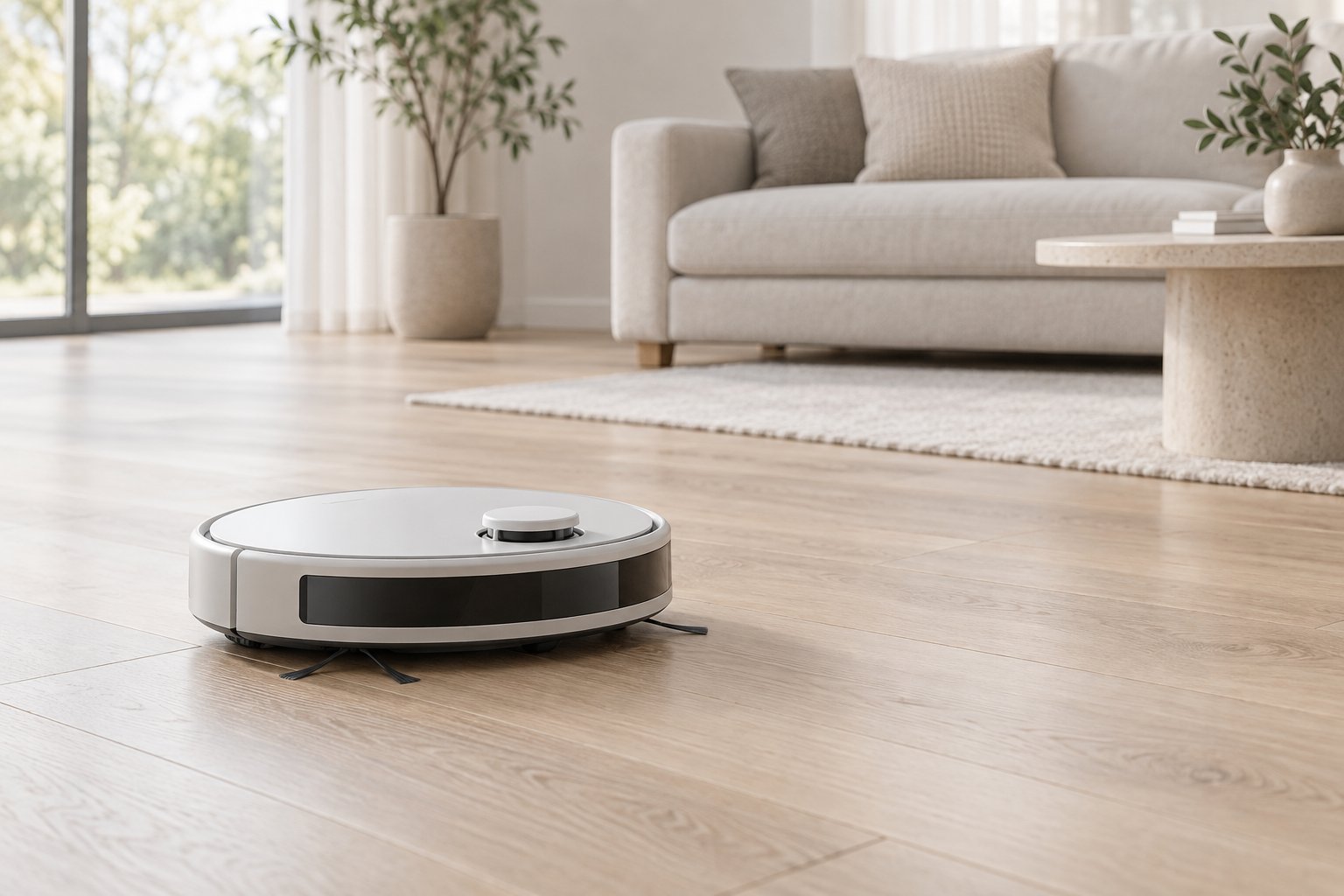
For example, a slim robot vacuum with 2200 Pa suction, a 100-minute runtime, app control, and automatic return to the charging dock covers the daily cleaning needs of most households with hard floors and low-pile carpets.
Match the model to the household
For a busy household that wants floors cleaned on a schedule while people are out, a robot vacuum with app control and self-charging is the practical choice. For a home with pets, prioritize suction power and a dust cup that is easy to empty. For a small apartment, a slim model that fits under furniture is more useful than a larger one.
What buyers should ask a supplier
When sourcing robot vacuums, confirm the exact suction rating, runtime, navigation type, and whether the app and scheduling are included. Ask how the robot returns to charge, how the dust cup is emptied and cleaned, and what floor types the manufacturer recommends. These details decide whether the model fits your target market.
FAQ
Is a robot vacuum worth it?
For households with hard floors or low-pile carpets that want daily automated cleaning, yes. It reduces how often you need to vacuum manually, though it does not replace a full-size vacuum for deep cleaning.
How long does a robot vacuum battery last?
Runtime varies by model. A 100-minute runtime is typical for a mid-range robot vacuum and covers most homes in a single pass before returning to charge.
Can a robot vacuum handle pet hair?
Many models with strong suction handle pet hair on hard floors and low-pile carpets. Check the suction rating and how easy the dust cup is to empty.