Battery type, filter care, dust cup design, and motor workload determine how long a stick or handheld cordless vacuum lasts. Here are the evaluation criteria buyers should verify with a supplier before sourcing.
Sourcing Guide
“How long do stick vacuums last?” is one of the most common questions buyers ask before placing a cordless vacuum order — and it has no single answer. Lifespan is not a fixed number printed on a spec sheet. It is the combined result of battery chemistry and capacity, filter maintenance, dust cup design, and how hard the motor works in real use. This explainer breaks down what actually determines longevity, so you can judge a cordless stick or handheld vacuum on the right criteria instead of a vague promise.
- Battery type and capacity set the ceiling on usable cycle life; Li-ion cells dominate cordless vacuums.
- Washable vs disposable filters change the maintenance burden and how quickly suction fades.
- Dust cup design affects clogging, emptying effort, and airflow consistency.
- Motor power must be matched to workload — a light handheld and a full stick vacuum are not the same duty cycle.
- Ask the supplier for battery, filter, and runtime specs rather than a single lifespan claim.
Battery Type and Capacity
The battery is usually the first component to limit a cordless vacuum’s useful life. Most modern stick and handheld models use lithium-ion cells, but “Li-ion” alone says little. Capacity, cell quality, charge management, and how the user charges the unit all matter.
Take the 8kPa Cordless USB-C Handheld Vacuum (ZY-HV05) as a concrete example: it carries a 2000 mAh Li-ion battery rated for a 25-minute runtime, with USB-C charging. Those three figures — capacity, runtime, and charging method — are the ones to compare across models. A larger mAh rating generally supports longer runtime per charge, but charging habits (full discharge vs top-up) and the charger’s behavior influence how many charge cycles the pack delivers before capacity drops noticeably.
For buyers, the practical question is not “how many years will it last” but “what is the battery capacity, what runtime does it deliver, and how is charging managed?” If a supplier cannot answer those, the lifespan claim is guesswork.
Washable vs Disposable Filters
Filters are the second major factor in cordless vacuum longevity, because a clogged filter forces the motor to work harder and reduces suction. Over time, that strain shortens motor life and makes the vacuum feel “weak” long before the battery fails.
Washable filters are common in cordless models because they reduce consumable cost and keep the airflow path cleaner between deep cleans. The trade-off is that the user must wash and fully dry them on schedule — a wet or neglected filter can damage the motor. Disposable filters are simpler to swap but add ongoing cost and depend on a steady supply of replacements.
When sourcing, ask which filter type a model uses, how often it should be cleaned or replaced, and whether replacement filters are available as a separate SKU. A model with a washable filter and a clear maintenance interval is easier to support in after-sales.
Dust Cup Design
The dust cup is often overlooked, yet it directly affects how consistently a vacuum performs. A cup that is hard to empty, or that traps fine dust in corners, forces the user to handle the unit more and can leave residual debris near the filter. That residual dust reduces airflow and accelerates the decline in suction.
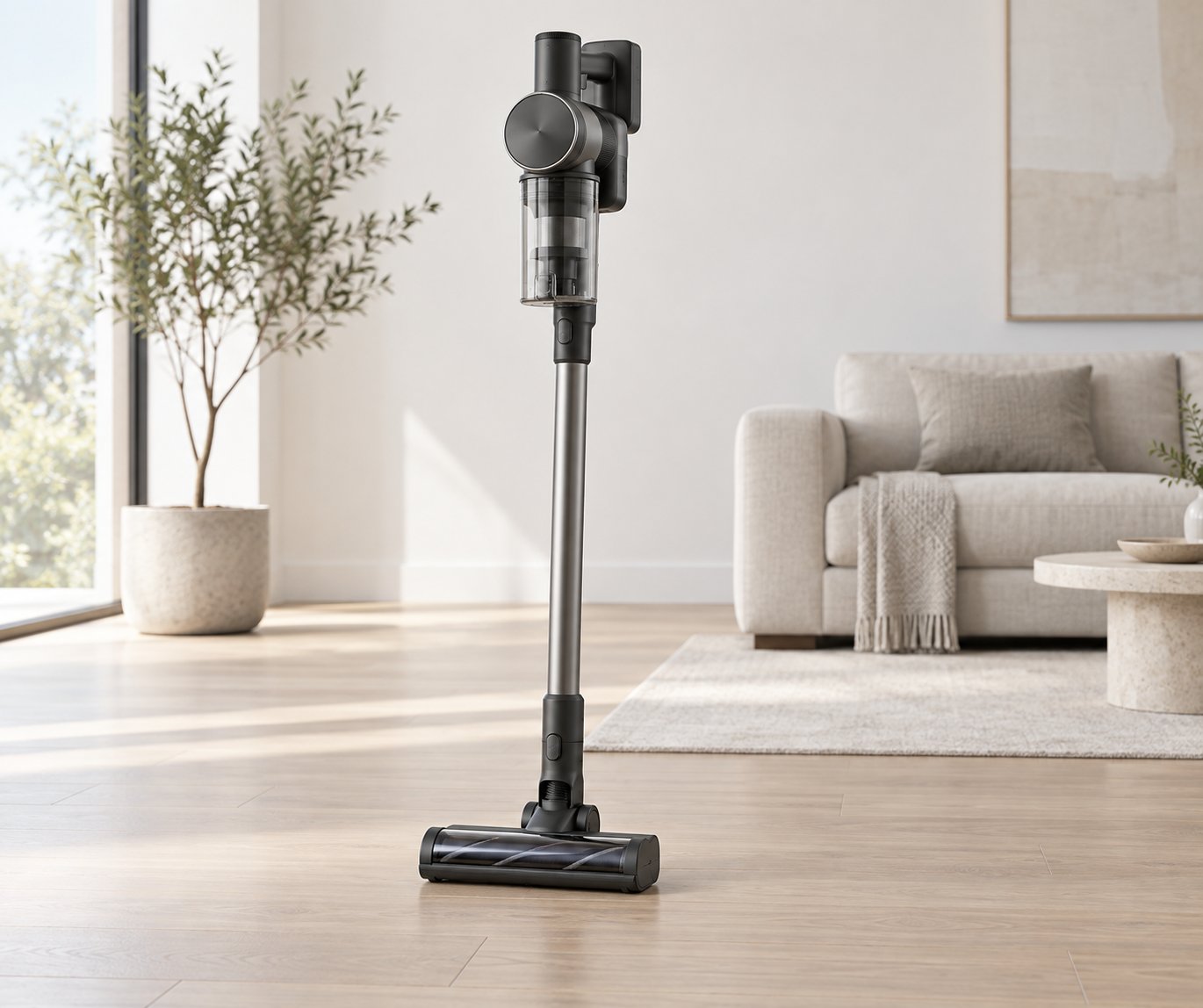
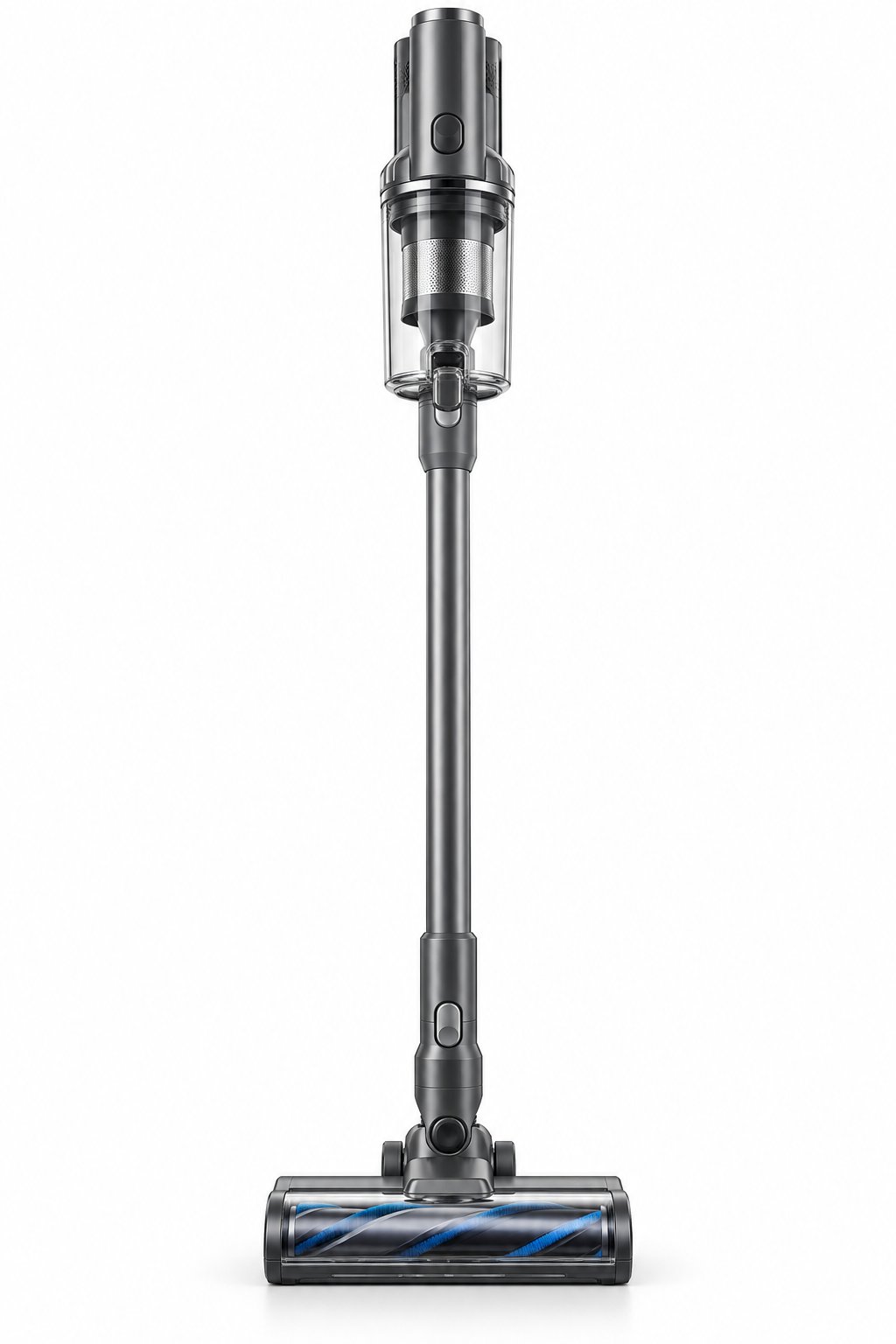
Transparent dust cups help because the user can see the fill level and empty it before it becomes a problem. The Cordless Stick Vacuum with Transparent Washable Dust Cup uses this approach: the transparent cup makes fill level visible, and the washable design supports routine cleaning. For a stick vacuum that also includes a floor head and extension pole, cup capacity and emptying ergonomics matter because the unit is used for larger floor areas, not just spot cleaning.
If you are evaluating a supplier, ask for the dust cup volume, how it opens, and whether the internal geometry is designed to shed dust rather than trap it.
Motor Power vs Workload
A motor’s rated power tells you what it can draw, not how long it will survive. Longevity depends on matching the motor to its workload. A handheld vacuum meant for short pickups operates very differently from a stick vacuum pushed across a full floor.
The ZY-HV05 handheld is rated at 120 W with 8 kPa suction — a specification set for handheld tasks. The stick vacuum, by contrast, is designed for floor cleaning with a floor head and extension pole, and is rated for 220–240 V operation (for the regions where that mains voltage applies). The key point for buyers is that a higher continuous load generates more heat and wears components faster. A well-designed model manages that through airflow, duty cycle, and motor selection.
Ask the supplier what duty cycle the motor is designed for and whether the suction rating is measured at the motor or at the nozzle. Those details reveal more about durability than a headline power number.
How to Evaluate a Supplier on Longevity
Rather than asking “how long does it last,” use these criteria to compare models and suppliers:
| Factor | What to ask | Why it matters |
|---|---|---|
| Battery | Cell type, capacity (mAh), runtime (min), charging method | Sets usable cycle life and daily runtime |
| Filter | Washable or disposable? Cleaning interval? Replacement SKU? | Affects suction consistency and after-sales cost |
| Dust cup | Volume, opening mechanism, internal geometry | Influences clogging and airflow over time |
| Motor | Rated power, suction (kPa), duty cycle | Heat and load determine wear rate |
| Voltage | 220–240 V or other market voltage | Must match the destination market’s mains supply |
Guangdong Zhiyue Electric is a small home appliance OEM/ODM supplier for Europe and North America, and models like the cordless stick vacuum and the ZY-HV05 handheld are built around these components. When you request a quote, ask for the battery, filter, dust cup, and motor specifications in writing — that is the evidence that supports any lifespan discussion.
FAQ
How long do stick vacuums last?
There is no universal figure. Useful life depends on battery cycle life, filter maintenance, dust cup design, and how hard the motor is worked. Ask the supplier for the battery capacity and runtime, filter type, and motor duty cycle rather than a single year estimate.
How long should a stick vacuum last?
A stick vacuum should last as long as its weakest consumable — usually the battery or filter — is properly maintained. Buyers should evaluate whether replacements are available and whether the design supports easy cleaning and part replacement.
How long do handheld vacuums last?
Handheld vacuums often last longer per charge cycle because they are used for shorter bursts, but their batteries are also smaller. The same factors apply: capacity, charging habits, filter care, and motor load.
How to clean a handheld vacuum?
Empty the dust cup after each use, remove and wash the filter according to the manufacturer’s interval, and let it dry completely before reinstalling. Check the supplier’s manual for the specific model’s cleaning steps.
When you are sourcing cordless vacuums, treat lifespan as a set of verifiable specifications, not a marketing line. Request the battery, filter, dust cup, and motor data for the exact model you plan to order, and confirm that replacement parts are available. For OEM/ODM inquiries on cordless stick and handheld vacuums, contact Guangdong Zhiyue Electric with your target market and voltage requirements.